New Orleans · Hotels
JW Marriott New Orleans
This address earned its place on the list for what it has survived as much...
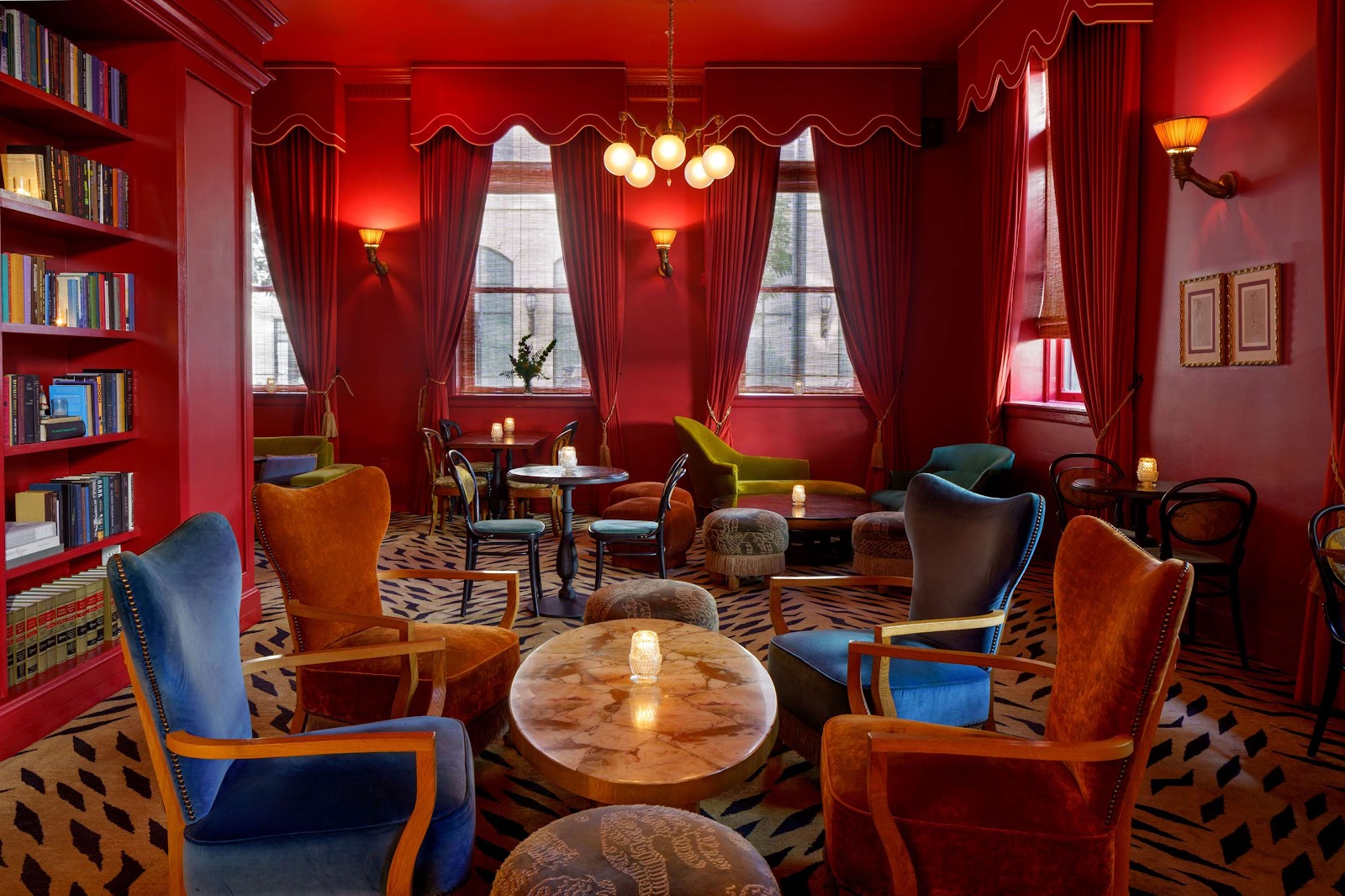
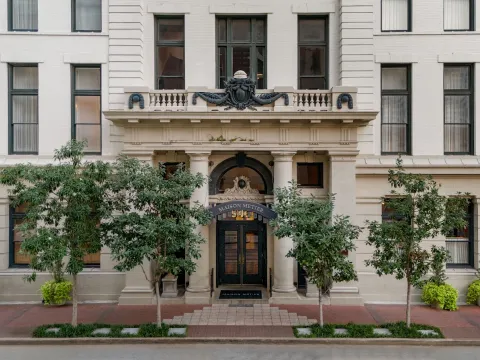
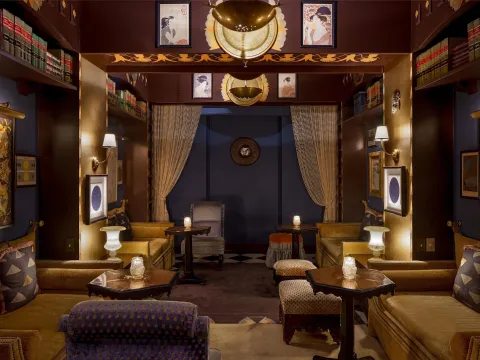
Behind an unmarked door on Carondelet Street, in the thick of the Warehouse District, a century-old bank building holds one of New Orleans's most unusual stays. Maison de la Luz keeps its original marble floors and wrought-iron details, but Studio Shamshiri's design turns the usual hotel lobby inside out: there is no front desk, only a living room with low sofas and a stocked honor bar, where a silk-tasseled key fob stands in for a key card. Motifs of snakes and mystics run through the common rooms, a quiet nod to the city's occult reputation, while art gathered from the port city's trading history fills every alcove. It reads less like a hotel and more like an apartment kept by a well-traveled friend.
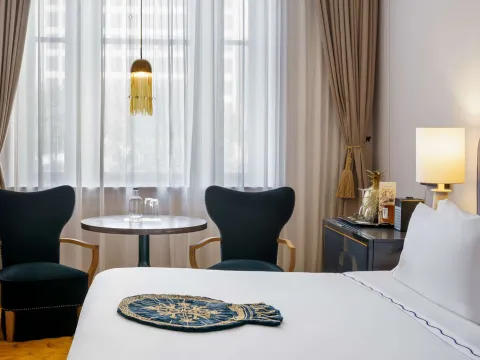
We chose Maison de la Luz because it commits fully to its premise instead of hedging with hotel conventions. The 67 rooms are painted in lavender rather than the neutral tones built to photograph well, and closets are replaced by freestanding wooden wardrobes. Breakfast is served under swamp-plant murals rather than in a generic café, and the honor system at the living room bar signals a level of trust most properties never extend to guests. It is a small risk, structurally, and it pays off: everything about the stay feels considered rather than templated, which is rare at this scale of ambition.
Carondelet Street sits inside the Warehouse District, a five- to ten-minute walk from the galleries and restaurants that have made this pocket of downtown New Orleans one of the city's more design-literate neighborhoods. The French Quarter's noise and crowds stay a short streetcar ride away rather than at the front door, which keeps the guesthouse quiet after dark. Within walking distance: the Ogden Museum of Southern Art and Lafayette Square, with the restaurant row along the lower end of Magazine Street close behind. The address trades Bourbon Street's density for a calmer, gallery-dense pocket of downtown, with the city's older quarters still close enough for an evening out.
Prix : Luxe (€€€€)
Vibe : intimate, art-filled, residential
Chambres : 67, lavender-painted, wooden wardrobes in place of closets
Best For : couples and design-minded travelers seeking a hotel that doesn't feel like one
Our Favorite Thing About the Hotel : the silk-tasseled key fob set with a glass evil eye, handed over in place of a key card
Dining : Bar Marilou, reached through a hidden door, serving aperitifs and caviar-topped Pommes Marilou; continental breakfast in a mural-lined room
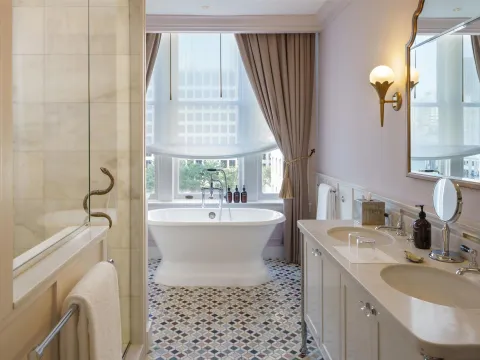
Amenities : honor-system living room bar, hand-embroidered linens, Italian marble bathrooms with soaker tubs
Attractions : Ogden Museum of Southern Art and Lafayette Square within walking distance; French Quarter a short streetcar ride away
Each of the 67 rooms swaps the usual built-in closet for a freestanding wooden wardrobe, the kind of furniture choice that makes a room feel inhabited rather than issued. Hand-embroidered linens and bathrooms finished in Italian marble, with soaker tubs rather than stall showers, carry the same logic through to the smallest details. Nothing in the layout announces itself as hotel standard issue; it reads instead like a guest bedroom in an especially well-kept private house, scaled up sixty-seven times without losing the sense of having been furnished by one person's eye. Even the wardrobes vary slightly from room to room, a detail that rewards a longer stay over a single night.
The hotel's bar sits behind a door built to look like part of the wall, a small piece of theater that sets the tone for what follows: a scarlet-toned room pouring French-accented aperitifs and bar bites, including a version of Pommes Marilou finished with caviar. It functions as the hotel's only real public room besides the living room, which keeps the energy contained and makes a seat at the bar feel like being let in on something rather than seated at a hotel restaurant. Guests staying elsewhere in the Warehouse District have been known to cross the neighborhood just for a seat at this one.
This address earned its place on the list for what it has survived as much...
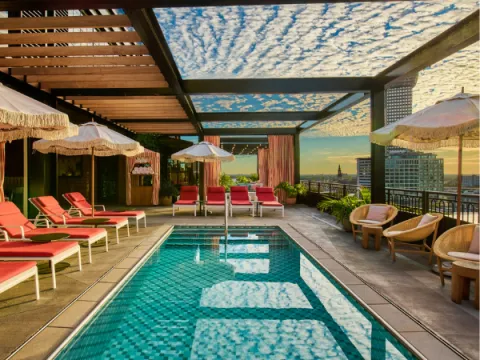
What convinced us here is how deliberately local this big-brand hotel refuses to feel generic....
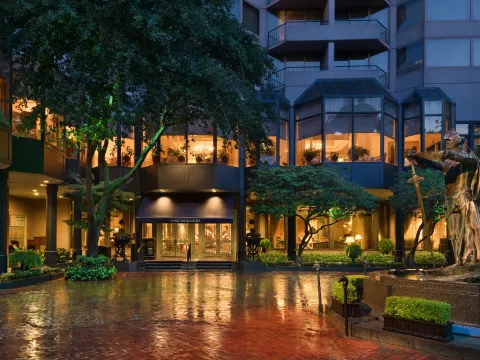
What we loved about the Windsor Court is how little it tries to impress. Behind...